Commercial Waste Removal in Finchley
Commercial waste removal in Finchley needs to be organised, practical and suited to the type of premises being cleared. Whether you are managing an office, shop, workshop or shared workspace, the service has to handle mixed materials carefully and leave the site ready for normal use. Our focus is on collecting business waste in a way that supports day-to-day operations, with clear attention to sorting, loading and responsible disposal.
This page sets out the main commercial waste services available, including routine business waste collections, office clearance work, bulky item removal and specialist disposal for certain materials. If you need a straightforward starting point, the business waste removal service is the best place to begin. For planned work or irregular clearances, the aim is always the same: remove what is no longer needed, keep disruption under control and make the process easy to arrange.
Different premises create different kinds of waste, so the service has to stay flexible. A retail unit may need stockroom items and packaging taken away, while an office might require desks, chairs, filing cabinets and mixed recyclable material cleared in one visit. In each case, the work is shaped around what is present, what can be separated for recovery and what needs careful disposal under current rules.
Business waste collections for day-to-day operations
Regular business waste collection suits premises that build up refuse steadily rather than in one large clear-out. Offices, clinics, studios, shops and smaller commercial units often need a dependable way to remove bagged waste, cardboard, packaging and other everyday materials without letting them accumulate. The service can be arranged around practical access and the volume of waste present, so the collection fits the premises rather than interrupting it.
Commercial waste is not only about general rubbish. In many workplaces, the material stream changes from week to week as deliveries arrive, stock is unpacked and old equipment leaves the site. That is why a good collection plan needs to consider whether the waste includes recyclables, confidential paperwork, broken fixtures or heavier items that need special handling. If your business also needs document destruction, the confidential shredding page is relevant for secure paper disposal.
The most efficient collections usually begin with a sensible sort of what needs to go. Mixed waste, cardboard, office consumables and redundant items are often easier to clear when they are grouped before collection. Useful preparation includes:
- separating obvious recycling where it is already sorted on site
- keeping sharp or fragile items away from loose bagged waste
- leaving access routes clear for loading
- identifying anything that needs specialist treatment before collection
Office clearance and furniture disposal

Office clearance work is useful when a workplace is being reorganised, downsized or refreshed with new furniture. It can cover desks, storage units, task chairs, meeting tables, shelving and mixed office equipment that is no longer needed. The aim is to remove items in a controlled way so that the space can be returned to use without leaving loose fittings or unwanted debris behind. Where appliances or mixed electrical items are involved, they need to be handled with care and not treated as ordinary rubbish.
If you are replacing fit-out items or removing outdated pieces, the office clearance service helps with larger workplace changes, while furniture disposal is suitable for individual items or smaller groups of bulky pieces. There is also a separate furniture clearance option for situations where a broader mixed load includes items that are not limited to office use. Choosing the right service keeps the job matched to the material on site.
Bulkier office items often take more thought than bagged waste because they are awkward to move through corridors, stairs or reception areas. A practical clearance will consider how the items are assembled, whether they can be dismantled and how they can be carried safely. This matters especially where furniture is heavy, office layouts are tight or the premises are shared with other occupiers. The goal is a careful removal, not a rushed lift-and-go approach.
Household-type clearances within business premises
Commercial sites sometimes contain items that are more like domestic waste than ordinary workplace rubbish. A back office, staff room, storage area or rented unit can build up mixed furnishings, old household goods and general clutter over time. In those situations, it helps to use a clearance service that can deal with a broader load rather than expecting the business to sort every item into a narrow category before collection. That can make the process more efficient and less disruptive.
Where the work includes mixed contents from premises being emptied or reorganised, the relevant pages include flat clearance, house clearance and home clearance. Those services are especially useful when the material includes furniture, storage items, soft furnishings and general domestic-style waste. Choosing the closest match helps ensure the collection approach suits the type of items involved rather than forcing them into a narrower commercial label.
Some clearances are straightforward, but others benefit from a little advance thought. If items are mixed together in cupboards, loft spaces, basements or back rooms, it can help to decide in advance what stays and what goes. That is not because the service depends on perfect organisation; it is because a better understanding of the material helps the removal be tidier and more efficient. Where access is limited, the collection plan may need to account for stairs, narrow entrances or shared access routes.
Bulky and specialist item removal
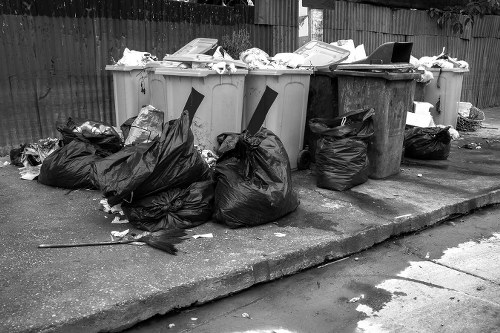
Some commercial waste is bulky rather than numerous. Large armchairs, sofas, mattresses, fridges, shelving and similar items often need their own removal plan because they occupy more space and may require care during lifting and transport. These items can arise in offices, hospitality premises, serviced accommodation, communal buildings and storage spaces. A service that deals specifically with bulky items reduces the chance of damage to walls, corridors or fittings while the work is being carried out.
For items that need a clearer category, the available pages include mattress and sofa disposal and fridge and appliance removal. Heavy appliances and upholstered items often need different handling, especially where the material contains components that should not simply be mixed with general waste. If you are looking at restricted or potentially difficult materials, the hazardous waste disposal page is the more suitable starting point for understanding whether the item needs specialist treatment.
When a bulky item is moved, the work usually depends on the item's condition, weight and the route it needs to travel. Broken items may shed loose parts, while intact items may be awkward because of size or shape. Safe handling matters as much as removal speed, especially in premises that remain open to staff, visitors or customers during the collection. If there are several items, grouping them near the exit can make the work smoother without changing the actual disposal method.
Garage, loft and storage clearances
Storage areas often collect a wide mix of waste over time, especially in premises that use back rooms, loft spaces or garages for archived stock, broken fixtures and old packaging. Those spaces can contain items that are not immediately visible until the clearance starts, which makes them different from normal bin-emptying work. A well-planned removal takes account of the contents, the route out of the space and whether the waste includes recyclable material, damaged fittings or unwanted household-style items.
The relevant services include garage clearance and loft clearance, both of which are suited to places where materials have been stored for a long time and are no longer in active use. If the area contains only part of a property or mixed contents from several rooms, the broader waste removal page may be the best fit. These pages are helpful when the job is less about one item and more about clearing a whole storage zone properly.
Storage clearances benefit from a calm, ordered approach. Where items are stacked, boxed or partially hidden, it is often easiest to work from the front of the space backwards so the load can be assessed as it is uncovered. That means the service can identify reusable, recyclable or disposable material more accurately. It also helps avoid unnecessary damage to the building or to anything that needs to remain on site.
Builders waste and refurbishment debris
Commercial waste removal in Finchley can also include the aftermath of small building projects, fit-outs and refurbishments. Builders waste is different from normal office or household waste because it often contains heavier, rougher or dustier material such as offcuts, packaging, broken fixtures, plasterboard, timber and removed fittings. This kind of load needs sensible handling so that it is removed efficiently without spreading mess through the rest of the property.
The dedicated builders waste clearance page covers this kind of work and is especially relevant after improvements to offices, shops, back rooms or shared business spaces. In some cases, a clearance may combine building debris with older contents that were already in the room before the work began. Where mixed waste is involved, the approach is to separate what can be handled through standard collection from what needs specialist attention or extra care.
Refurbishment waste is often easier to manage if the main categories are kept distinct. Timber, packaging, broken fittings and general rubbish should not all be left in one difficult pile if they can be split beforehand. That does not require a full site sort, but it does mean the collection can be carried out in a more orderly way. Good access, sensible stacking and clear identification of awkward items all help the work proceed without unnecessary delay.
Price factors, access and quotation details

Costs for commercial waste removal usually depend on the type of material, the total volume, the ease of access and whether any items need special handling. A small office clear-out is not priced the same way as a mixed builders waste job or a collection that includes bulky appliances. If the waste is in an upper-floor room, a basement, a locked stock area or a shared building, the access arrangements may also affect how the work is planned and how long it takes.
For a clearer view of how quotations are handled, see pricing and quotes. That page is useful if you want to understand what information usually helps before a collection is arranged. In practice, a sensible quote is based on the material present rather than on assumptions. The most helpful details are the item types, approximate amount and any practical limitations such as stairs, parking or restricted loading access. A plain description is usually enough to begin.
Two points are worth keeping in mind when you request a price. First, the more accurately the waste type is described, the easier it is to match the right removal approach. Second, if a space contains a mixture of items, it is better to mention the whole load than only the obvious bulky pieces. That gives a better basis for planning and avoids the need to revisit the job specification later.
Recycling, sorting and responsible disposal
Commercial waste should not be treated as a single undifferentiated stream if it can be sorted more intelligently. Cardboard, paper, office furniture, electrical items and general waste often follow different disposal routes, and the best service will take that into account before anything leaves the premises. This is especially important for businesses that generate repeated waste from deliveries, packaging, equipment replacement or regular cleaning of workspaces. A more careful approach can reduce avoidable landfill and improve the handling of recoverable material.
The recycling and sustainability page gives a useful overview of how recoverable material is treated alongside residual waste. It is also worth noting that some items, although unwanted, still need to be assessed separately before disposal. For example, electronic equipment, broken appliances and certain mixed materials may not belong in the same route as clean cardboard or general office rubbish. A responsible service separates those decisions before the load is taken away.
Where possible, it helps to think in terms of material types rather than just objects. Paper, timber, metal, plastic, textiles and electrical goods may all require different handling. That is not only a disposal issue; it also affects how the collection is loaded and whether a simpler route can be used for part of the waste. Businesses often find that a clearer sort at source makes the removal faster and the final result tidier.
About Finchley
Finchley is a district in north London, historically part of Middlesex and now within the London Borough of Barnet. It sits on the higher ground of the north London ridge, with the landscape falling away towards the valley of the River Brent to the west and the Lea valley farther east. The area developed from a rural settlement into a suburban district during the nineteenth and early twentieth centuries, especially after the arrival of the railway and later Underground links. That growth left a varied built environment, with older village traces alongside long terraces, interwar streets and more recent infill development. East Finchley, Finchley Central and North Finchley are the main centres commonly associated with the district, each with its own pattern of shops, civic buildings and transport links. Among the local landmarks are Victoria Park, the Phoenix Cinema in East Finchley, the Dollis Brook valley and the green corridors that give the area a more open feel than much of inner London. Finchley Memorial Hospital, Avenue House and the surrounding grounds are also part of the district’s civic and local history. Religious buildings, schools and community halls reflect the area’s long suburban evolution and the range of communities that have lived there. The district’s roads and public spaces show layers of change: former lanes, suburban parades, garden suburbs and modern redevelopment all sit within a framework that still preserves a recognisable North London character. Cultural life is shaped by local theatres, cinemas, parks and active community groups, while the transport network ties the area closely to central London and neighbouring parts of Barnet, making Finchley a place with both local identity and strong urban connection.
Commercial clearances for shops, workplaces and shared buildings

Many commercial clearances are best thought of as a combination of planning and practical removal. Shops may need old display units or stockroom items taken away, while shared buildings may need waste cleared from common areas, plant rooms or storage cupboards. Offices and service premises often have a mix of items that do not fit a single category neatly, so the clearance has to be adapted to the site. That can include bagged waste, furniture, packaging, fixtures and occasional specialist items.
If your premises involve more than one type of clearance, it is sensible to identify the main category first and then note the other material that sits alongside it. A business that also needs general waste handling can look at waste removal, while one with a broader mixed load may find the business waste removal page a better match. For items that must be booked online, the book online page is available, but many enquiries start simply by describing the waste and the access.
When you are ready to request a quotation, keep the description practical and direct: what the waste is, where it is located and whether there are any access restrictions. You do not need to overstate the job to make it sound bigger or smaller than it is. Clear facts give a better basis for a quotation than guesswork, and they also help the removal be organised in the right order. If the waste includes confidential papers, appliances or mixed bulky items, mention those separately so the collection can be matched properly.